Showing posts with label Saving Money - In the Home. Show all posts

Wednesday, March 13, 2013

We Cancelled Our Cable TV and Land Line

As of March 1, we are a cable TV and land line free home.


We like TV, so it was a bold move for my family. We were paying for a deluxe bundle package that included high speed Internet, a land line, a gazillion cable channels, and HBO, which we enjoyed quite a bit.

But when our cable/Internet/phone bill increased over $100 from the previous month, we thought twice about our love for cable TV in our home. While I sheepishly admit that I may have had a slight addiction to the reality shows on Bravo TV, I also realized that I was spending too much time watching grown women cat fight in their Manolo Blahniks--that they clearly can't afford. And I definitely don't want to spend an additional $1200 a year to watch that train wreck

Anyway, following the advice of personal finance bloggers everywhere, I immediately called the company to understand why our bill increased by so much and negotiate a new price. I was told that we had enjoyed a promotional price for two years and the new price reflected on our bill is the actual price for the package we had originally chosen. Huh, no budging, not an inch.

So, my husband took a different approach and chatted with an online customer service representative only to be told that the online reps are not able to offer anything but the prices that are listed on the website.

Wow, they're really making this decision easy for us. After quite a bit of research, we decided to cancel our cable to pursue other TV options, which I'll describe further in an upcoming post.

And in the process, my husband point blank asked me, "who calls us on the land line?" Back in October, I would have said, "President Barack Obama and Governor Mitt Romney", but campaign season is over, so my reply was, "NO ONE." Honestly, we are using our iPhones for everything.

So we cut that cord too!

A funny thing happens when you call a cable company to cancel services--they reduce their price. But it was too late. They weren't in any hurry to help us out previously when we hadn't even considered leaving cable TV and we were already intrigued by much cheaper online TV viewing options.

We kept the Internet, of course! So now instead of paying an additional $100 a month for our deluxe cable package, we will now pay about $55 less than our original bill for our high speed internet, so we are saving about $660 a year.

It's now March 14 and we can honestly say that we do NOT miss cable TV one bit!

Do you have cable TV and a land line or have you cut the cord too? Let us know in the comments!

Thanks for reading. If you would like to receive FREE updates of FBS, there are four ways to do so:
Follow Me on Pinterest

Saturday, October 27, 2012

I'm Preparing for Hurrincane Sandy

In case you haven't heard, there's a behemoth storm headed to the east coast. Unfortunately, my family and I are among the millions of east coast residents that live in its path.

Now you know meteorologists have been wrong before and generally, I'm not an alarmist as my husband reminded me of earlier today, but what if they're right this time. We are fortunate that we don't live in a flood zone, but the news keeps talking about the possibility of vast power outages for up to several days, even after the storm is over. And that is what makes me nervous.

So, I spent the afternoon getting some things organized just in case Sandy becomes the superstorm that is predicted.

First, I put a call out on the FBS Facebook page for ideas on the food that I should stock up on in case we lose power. I received  a lot of ideas and I headed out to the store for bread, canned tuna and chicken, apples, and breakfast bars. I already have plenty of snacks, peanut butter, and nuts.

Next, I filled up all of my pitchers with water from our reverse osmosis system for drinking.


I also filled up plastic containers with water and placed in both of my freezers to make ice. If we have a lengthy power outage, I'm at risk to lose a lot of food, so hopefully by filling my freezer with ice, I'll avoid the food thawing out and spoiling.


Fortunately I haven't emptied the rain barrel for the winter yet, so we'll use that water to flow the toilets if needed.


Even though my husband thinks I might be taking this all a bit overboard, he did pull together all of our flashlights and checked for batteries. He also took down the umbrellas and cleaned up the back patio.

If we find ourselves without electric after the storm ends, we do have our gas grill with a full extra canister to cook food.


My to-do list for Sunday before the storm begins includes laundry, baking, cleaning out the refrigerator, filling the cars up with gas, checking on our neighbors, and praying that Sandy turns back out to the Atlantic.

Are you in Hurricane Sandy's path? How are you preparing? Do you have any tips for emergency preparations? Let us know in the comments.

Thanks for reading. If you would like to receive FREE updates of FBS, there are four ways to do so:
Follow Me on Pinterest

Tuesday, September 18, 2012

Another Reason Why I LOVE Fall!


I've mentioned before that my family loves the fall. But there is one more reason why I love fall--no heating or cooling bills.

After a HOT and steamy summer where the air conditioner ran all day, our windows are finally open and fresh air is blowing inside. This past week, the daytime was sunny and in the low to mid 70's and at night, the weather dipped to the high 40's to low 50's.

No air conditioner or heater needed, just an extra jacket or blanket.

Perfect weather, in my humble opinion.

How's the weather in your neck of the woods? Let us know in the comments.

Thanks for reading. If you would like to receive FREE updates of FBS, there are four ways to do so:
Follow Me on Pinterest

Thursday, August 23, 2012

DIY - Washing Machine Repair


As a wedding gift, my parents bought me and my husband a brand new washer and dryer. Just a few weeks ago, I was smugly admiring the fact that the set was still working very well 12 years later.

Until Saturday.

On Saturday, we arrived home after a week's vacation with extended family. I had piles of laundry to clean and started a load 2 minutes after we pulled into our drive way. I then helped my husband unload the van and we started to unpack. When I went to check on the laundry, I opened the lid and saw a machine full of water.

huh! I turned the knob to drain the water and nothing. Not a click. Not a single sound. Not good!

I tried different settings and found that the machine would agitate, but not drain the water.

Do you ever hear 'cha-ching' in your head? Well at this time, my head was spinning with 'cha-ching, cha-ching'. Have you seen the price of new washing machines? We really don't want to buy a new one right now!

But never fear, because Google can always find the answer. I typed "Kenmore top loading washing machine won't drain" into the search engine. Immediately, from various forums and sites, I determined that the problem was the lid switch. I also found a video that gave us step by step instructions to replace the lid switch.

We called Sears to order the part and were told we could pick it up on Monday and the cost was $40. No new washing machine or Sears labor costs for us! Miracles never cease.

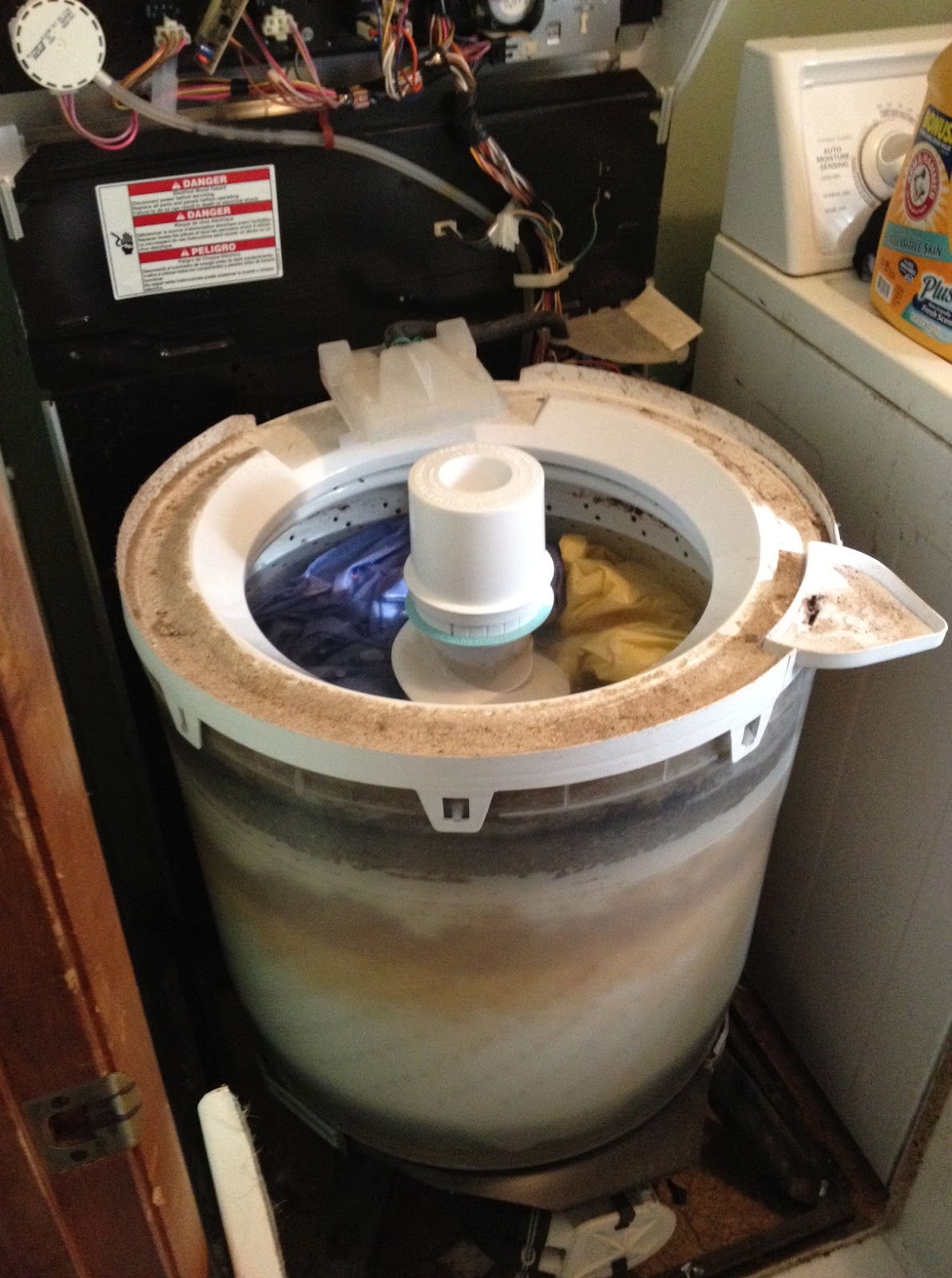
It's kind of a daunting task to take apart your washing machine. I never knew what lurked in the  under-belly of the machine; it's pretty grimy.


When my husband got home from work on Monday, we replaced the part, cleaned up the machine and turned it on. It drained right away. YAY!!


All is well in our laundry room again.

The moral of the story--don't assume an appliance is beyond repair, especially a do-it-yourself repair.

Have you ever been able to fix an appliance rather than buy new? Let us know in the comments.

Thanks for reading. If you would like to receive FREE updates of FBS, there are four ways to do so:
Follow Me on Pinterest

Friday, August 12, 2011

19 Articles to Help You Prepare for Back to School


I was going to write an elaborate post about planning for back to school, but I have read so many this past week that I decided to just round them all up for your convenience.

Transitions

Back to school has a different meaning for me this year than in the past. My oldest is entering Kindergarten and my youngest will be entering her first year of preschool. Lots of exciting changes in the FBS household.

Back to School Shopping

Next week is a big week for retailers. Years ago, I was a department store buyer and one of my buying categories was backpacks. The third week of August was always the biggest week for back-to-school sales and one year, I remember selling 10,000 backpacks in that one week. So expect this weekend's store flyers to be huge.

Back to School Meal Time Ideas


Heading to College


Are you busy getting ready for back-to-school? What changes are going on at your home this fall? Let us know in the comments.

Thanks for reading. If you would like to receive FREE updates of FBS, there are four ways to do so:


Image: nuttakit / FreeDigitalPhotos.net

Thursday, August 4, 2011

7 Tips to Conserve Water and Save Money

After such a wet spring in the northeast, it is hard to imagine how dry things have become. Thankfully in PA, the wet spring shored up the water tables and we will get through the rest of the summer without worrying about a water shortage.

But unfortunately many parts of the country aren't so lucky. According to the National Drought Mitigation Center and CNN, nearly 12% of the United States experienced exceptional drought conditions in July and another 40% of the U.S. experienced abnormal drought conditions.

7 Tips to Conserve Water and Save Money

1. Conserve rain water. I lucked out when I bought my rain barrel from my county’s conservation district years ago for $25. There is now a 2 year wait list and the cost has increased to $55.

A few years ago, you didn’t see rain barrels much, but many stores now carry them. Store-bought rain barrels can set you back between $100-$200. It will take time until a store bought version pays for itself from the water saved. But, if you are a do-it-yourselfer, this could be a great project to try. A quick google search will help you find some ideas.

In the past, I rarely had to rely on the water hose, but the rain was scarce in July and my barrel dried up. Thankfully after a small rain, it filled up again rather quickly. There are times in the spring that I wish I had room for a second barrel.


2. Use water collected from dehumidifier to water your garden and flower pots. In the summer, our basement gets very damp and musty, so we run a dehumidifier constantly. It fills up quickly on sweltering days and I use that water for my flower pots.


3. When waiting for the hot water to heat up from the faucet, trap water in a jug or bucket and use it to water your garden and flower containers.

4. Use the water from steaming vegetables and/or corn on the cob to water your garden. I don't always remember to do this until the moment I am pouring the vegetables through a colander. I need to get better at this tip too.

5. Choose drought tolerant plants for your landscape. This is something we considered when we designed our front lawn landscape. A quick google search will help you find a list of these plants for your garden zone or ask the staff at your local garden nursery.

6. Water your garden in the early morning or evening to avoid evaporation from the mid-day sun. Also, water at the root of the plant, not from above the plant. Plants absorb water at the roots, so watering the leaves is wasting water.

7. Limit shower time. This one is hard for me since long, hot showers can be so relaxing, especially after my morning run. This Shower Water and Energy Use Calculator will give you an idea of how much water you are using based on your own personal inputs.

I'm ashamed to admit, but I am more cautious of our water use in the summer. I really should be conserving year round, especially since we pay for our water. Do you live in a part of the country that is suffering from a drought right now? What tips do you have to conserve water? Please share with us in the comments.

Thanks for reading. If you would like to receive FREE updates of FBS, there are four ways to do so:
This post is linked to Your Green Resource at The Greenbacks Gal.

Wednesday, July 20, 2011

Do You Have A Plan for Replacing Your Appliances?


This September we will be celebrating 10 years in our home. The house came with very few appliances. Upon moving in, we needed a washer, dryer and refrigerator. Within two years after moving in, we purchased a new oven, microwave, dishwasher and freezer. The home came with central air conditioning and when we had it serviced last summer, the technician estimated that the unit was probably 15 - 20 years old.

Why am I listing all of this for you? When our refrigerator started rattling recently, it occurred to me that many of our appliances are heading towards old age. While I have no desire to replace any of them right now, I also don't want our finances to be thrown for a loop when something does decide to take a trip to appliance heaven. I don't want to drain the emergency fund, which could easily happen when the AC needs replaced. We certainly don't want to go into debt either.

My main concern is that AC unit. Every year, I try to go as long as possible before we turn the AC on, and I cross my fingers that it will work properly. Every year, I pray that this isn't the year that it decides to go kaput. And yes, I do realize that it is probably not the most energy efficient unit at 15+ years of age, but a new unit could cost $5000+.

So in the meantime, I'll hope for the best and do a little planning.

1 - Take inventory of every appliance in your home. When and where did you purchase the appliances? Do you have the owners manuals and receipts? Are they under warranty? A warranty saved us a lot of money when our fairly new hot water heater unexpectedly broke last fall. Keep your inventory and your owners manuals all in one place.

2 - Take proper care of appliances. Read through the owners manuals to find out how to clean the appliances. Do they have filters that need replaced regularly? Did you know that you need to clean the outside of your refrigerator as well as the inside? I didn't and I found this article helpful, How to Avoid Refrigerator Repairs.

3 - Have appliances serviced regularly. Not all appliances need to be serviced, but we do have our AC unit and our two gas fire places serviced yearly. The units are cleaned and checked for any problems or issues.

4 - Start a replacement fund. I know. I know. Just one more thing to save money for, but this will help you (and me) avoid going into debt when our appliances need replaced.

What kind of shape are you appliances in? Have you thought about it lately? Are you prepared if something breaks down and needs replaced? Let us know in the comments.


Thanks for reading. If you would like to receive FREE updates of FBS, there are four ways to do so:


This post is linked to Frugal Friday at Life as MOM.

Wednesday, July 13, 2011

You Don't Have To Be A Student To Take Advantage of the Back-to-School Deals

My back-to-school bargains from last year:


As depressing as it might be, the back-to-school season will soon be upon us. As much as I want summer to linger on as long as possible, I also don't want to miss out on all of the loss leaders that stores will be throwing at us over the next four to six weeks.

This is the time of year to get some amazing deals on back-to-school supplies, but you don't have to be a student to take advantage of the deals. Depending on the item and store, the deals range from FREE to pennies of the original price. The stores lure you in with their loss-leader items, like Staples 1 cent and 25 cent deals in Sunday's paper. Stores hope that you come in to buy their other products, but if you stick to your list you hopefully won't get sucked in.

The stores are also fighting for your dollars, so check all of the flyers to determine what stores have the best price for your needs. Look for great deals in CVS, Rite-Aid, Staples, Office Max, Target, Kmart, Toys-R-Us, to name a few.

My other piece of advice to you is to get to the stores early, because the loss-leader items sell out very quickly and there are usually limits on the amount you can buy.

Other uses for back-to-school supplies:

1. Stock up on supplies for the home office. In Sunday's paper there were great deals on office supplies such as pens, staplers, notebooks, post-its, computer paper among other items.

2. Stock up for birthday or Christmas gifts and stocking stuffers. My girls love to draw and craft. At this time of year, I can find crayons, glue, construction paper and other craft items at very cheap prices and great for their Christmas stockings.

3. Consider donating school supplies to womens' shelters, local schools, children's hospitals, libraries, churches. I am sure they would appreciate your generosity.

4. Battle the boredom blues. I have a box of new supplies that I bring out when I hear, "I'm bored". Nothing cures the boredom blues like a new bottle of Elmer's glue and construction paper. My daughter is content for at least 2 hours.

5. Party favors for birthday, Halloween or other holiday parties. I bought some inexpensive pencil boxes a few years ago and stuffed with crayons, glue stick, scissors for birthday party favors.

One thing to remember is if you aren't going to use the 25 cent box of paper clips, then it just becomes clutter and it's probably best that you just stay home.

Are you going to take advantage of the back to school bargains?

Thanks for reading. If you would like to receive FREE updates of FBS, there are four ways to do so:

Friday, May 6, 2011

Hanging Clothes Outside To Dry


Finally, I have been able to start hanging the laundry outside this past week. Prior to this week, my backyard looked like a marsh after several days of rain. We have had record rain fall this spring...not conducive to hanging clothes outside to dry.


I don't have room for a line in our backyard, so I use 2 wooden drying racks. Not the best set up, but it works for me.

I do a load of laundry every morning in the warm weather during the week. By the early afternoon, the first load is dry and I hang a second load. I throw the wet clothes in the dryer for about 5-10 minutes to 'fluffen'(is that a word?) before I hang outside. But those minutes prevent the laundry, especially the towels from being 'crunchy'.

Hanging clothes outside to dry makes our electric bill far more manageable when the temperature spikes and the air conditioner is turned on.

Do you hang your laundry outside to dry? Tell us about your set up in the comments.

Thanks for reading. If you would like to receive FREE updates of FBS, there are four ways to do so:


This post is linked to Works for Me Wednesday at We are THAT Family.

Tuesday, March 29, 2011

Spring Clean...Your Windows for just pennies


Last week, I noticed a rather disturbing sight...the dining room windows. It was time to stop avoiding them, they were filthy and covered with my kids' finger prints.

My window solution costs pennies and does a great job. No streaks, just crystal clear, clean windows. A friend who owns a window cleaning business gave me this tip several years ago. Instead of industrial-strength cleaners, he uses original(blue) Dawn dish washing liquid to clean his windows.

Fill a spray bottle with water and add about 2 drops of original Dawn dish washing liquid. You don't need much Dawn; too much will make the windows soapy. Shake well right before spraying on the glass. I use old infant t-shirts instead of paper towels, and my windows go from grimy to crystal clear. This works well on mirrors too.

Thanks for reading. If you would like to receive FREE updates of FBS, there are four ways to do so:


This post is linked to Frugal Friday at Life as MOM and Works for Me Wednesday.

Tuesday, June 1, 2010

Spending Wisely When You Just Don't Want To Spend At All

The following is a guest post is from Amy at Money 4 This Not 4 That.


Every post you read about frugal living seems to be focused on how to save money. These lists are without a doubt the best thing out there. The wisdom you can gather from others is often invaluable, and other times it's your money saving tips that are the ones so appreciated by others.

Then we come upon the dilemma of spending. There are some things that you try and save on, but in the end you just need to spend your money wisely.


CLOTHING

Out of all the clothing needs that we buy for our family, these are the things that drive me crazy. Socks, underwear, sports bras, compression shorts, soccer shoes, soccer socks, soccer uniforms, sport teams sweatshirts, basketball shoes, track shoes, running shoes, dress shoes….stop me anytime. These are needs that you have to buy and you have to spend money on, so you had better spend wisely.

1. Buy a year in advance. It's harder to do when the kids are older (middle school, high school) but it can be done. My daughters feet quit growing a few years ago, so I can buy for her a little easier. My son on the other hand is in a major growth spurt. It's a gamble and depending on the price, it's a gamble I might take. So far so good.

2. Buy Quality, because you would like these to last throughout the year for all sporting activities. With compression shorts, socks, sports bras you just have to buy when you see a good price. Don't try and get fewer than you think you will need because they will wear out faster or your kids will start digging through your closet for what they need.


HOUSEHOLD

What about all the household needs that we have? The conveniences that we can no longer live without? How do we spend wisely on those items?

1. Buy your AC or heater in the off season. Better bargaining power when there isn't a lot of demand. When it breaks and it needs replaced at the time, even though it's a hard pill to swallow, buy a good one, even if it costs more. Do your home work, and get at least 3 bids.


2. Take your time when purchasing any appliance that goes out in your house. The inconvenience of having your stove go out, or your fridge or even a washer or dryer is awful. It's happened to us, it was our washer. I took my time, asking friends, reading consumer reports, shopping around and asking lots of questions. In the meantime I took a latte to my friend in exchange for washing machine use.

MEDICAL BILLS AND NEEDS

Then comes the dreaded medical bills. Medical needs and bills are huge money suckers, but don't go cheap. You can never prepare yourself for what may come, but spend wisely. I have to remind myself of this.

1. Research, know, understand every option. Don't ever, EVER put a price tag on your health. Again, trust me. I am so incredibly frugal I was out last night at 11pm picking up newspapers that had been laying out for 4 days that I knew had coupons in them. I am frugal, but at the same time I won't put a price tag on my health. After 9 months of research I have agreed to a surgery, that I need, that will cost me $40,000 out of pocket. Seriously check out my site, I am horribly frugal, but that lifestyle is what allowed us to make this decision. I am just glad that I will be able to make the best decision for myself.

2. There are many ways to save money on your medical bills too. Simple things like matching up bills to EOB and asking questions, ask for discounts and shop around for best pricing. For more details check out my blog.

3. If the medical need is glasses, be willing to spend money if you want the recipient to actually wear them.

4. Look for special medical credit cards like Care Credit that will help you pay off some of your medical expenses with a low interest rate or 0% interest, so you can choose the best option for your family. By doing this you spread the expenses out over a period of time, instead of one lump sum.

It's ok to spend, if you just do it wisely. Check out my blog, http://money4thisnot4that.com/ and see where I spend and where I save.


Thanks for reading FamilyBalanceSheet. If you would like to receive FREE updates of FBS through your RSS Feed, please click here to sign up. Or sign up for FREE email updates, by submitting your email address in the top left side of this site. Or click here to follow on Twitter.

Tuesday, April 27, 2010

Front-Yard Landscaping: 15 Tips To Help You Design Your Landscape and Save Money


Pin this Post on Pinterest

I may not be a professional landscape designer, but I am a homeowner who was trying to improve our home's curb appeal and save some money in the process.

The shrubs in our front yard were original to the house and our house was built in 1969. It was time to update the look, but we didn't want to break the bank. We considered hiring someone to help us design and install our front yard landscaping, but we are do-it-yourselfers and my husband was the one that convinced me that, "we can do it!".

I have written twice about our adventures in re-landscaping the front of our home, you can read about them here: Front Yard Landscaping: We Did It Ourselves and Do-It-Yourself Front Yard Landscaping: Take 2.

We have learned many lessons along the way, some by learning the hard way through trial and error, some from books and online, and some lessons were learned by just asking an employee at the garden store. Whether you are creating a foundation, entry planting or a border, I hope our lessons learned will help you improve your curb appeal and save you a buck or two.

15 Tips to Help You Design Your Landscape and Save Money Along the Way


1.Take Before Shots
Take 'before' and 'empty' photos of the area that you want to landscape from different angles and through out the season. I like to take updated photos around the 1st of every month. It is interesting to see how plants bloom, change, grow through out the season.

Beware of the killer yews...


Without any shrubs, it already looks so much better...


2 Take Measurements of Your Space.
Measure your space and draw it out on grid paper. With the grid paper, you can draw it out to scale, which will be very helpful when placing plants. On my grid, 1 square = 1 foot.


3. Know Where the Sun Is
How much sun/shade does the area get that you will be landscaping? And where does the area face: north, south, east, west? This is very important to know, because you don't want to put a shaded plant in a hot spot or you will likely kill the plant. Some areas get morning sun and afternoon shade and vice versa. Pay attention to the area and make notes on your drawing.

4. Know Your Growing Zone
What zone do you live in? This is important to know, because certain plants thrive in certain zones. Your local garden nursery is likely to only have the plants compatible with your zone, but if you buy through a catalog or online, you will want to know this number. Here is a Plant Hardiness Zone Map or you can ask someone at your local garden center.

5. Scout out Ideas
Walk or drive around different neighborhoods for visual ideas of design and plants. We drove through an upscale neighborhood, thinking we would be 'wowed' by the landscaping, but I was disappointed with the lack of originality of the designs. It turned out that we found more ideas from an older, established neighborhood.

6. Look for Inspiration Through Books and Magazines
Head to the library for landscaping books and magazines to get ideas for plants and design.

7. Write Your Plans Down
Keep a garden/landscaping journal or notebook to keep magazine pictures and articles or to jot down ideas, notes on what you have done, what worked, what didn't work, what you like, what you don't like, etc. This will be invaluable in years to come. I do this for my food gardening as well.

8. Talk to Local Professionals
Visit multiple and local garden nurseries to look around for ideas and plant suggestions. Take your pictures, measurements, ideas and notes and if you are stumped, ask the staff for ideas. Usually the nurseries are set up in sections by sun, shade, perennial, shrubs, evergreens, etc. You should now know the type of area that you are landscaping, so be sure to go to the correct section, for example, if your spot is shaded, go to the section for shaded plants. When we were designing our front yard, we visited 3 different garden centers and I asked a lot of questions. Most of the employees were very helpful or they led me to someone who could help us. We ended up buying our plants from all three places.

9. What is Your Focal Point?
What is the focal point of your landscape? We consider the bay window the front, center and focal point of ours and were disappointed with the results of our first choice. We recently moved the original plants and planted some new ones that will hopefully work out better for us. We basically have 3 sections to our landscape: the center bay window, the left corner, and the section right in front of our front door. Yet we wanted the entire landscape to flow together, hence the need for a drawing(#1).

10. Add Interest with Color
Consider planting for continuous color. In our landscaping, the color starts with some daffodils, then the azaleas start to bloom, then the rhododendron will bloom and later in the summer the hydrangea and St. John's Wort will bloom. To create more color, I want to add annual flowers for more summer blooming.

11. Know What You're Planting


When purchasing plants, read the tags on the plants carefully. The tag should give you information about the plants sun/shade needs, water/feeding instructions, etc. After purchasing your plants, keep the tags in your journal or notebook for future reference. When your landscaping is finished, people might ask you what the name of a particular plant or shrub is and you will be able to tell them with pride, 'that is a silversword azalea'. A lot of research, work, blood, sweat and maybe a few tears...just kidding...will go into those shrubs or plants, be proud of your work and know what you planted.

12. Don't Over-crowd
Give the plants the proper space that they need. Do not crowd the plants together. This is easy to do in the beginning when the plants are small, but they WILL grow into their determined size. If a plant tag says that it will grow 4 feet tall by 4 feet wide, allow for that space. This is also where your gridded drawing will come in handy.

13. Go Native
Consider plants native to your climate and location. Your garden center can give you recommendations on these plants. We just selected 2 Mtn. Laurels for our front landscaping, a PA native and our state flower.

14. Follow the Instructions When Planting


When it comes time to plant, make sure you get instructions on how to plant your shrubs/plants/flowers. Some plants have very specific needs on how they need to be planted. Their root ball might need to be slightly above ground or maybe 2 inches below ground. It is very important for the health and longevity of your plants to plant them correctly.

What kind of soil do you have and how do you need to amend it? You also need to know how to feed and water the plants especially that first, critical year. Some plants need to be watered regularly at first and some need some space between watering. Any good garden center will have this information ready to give you when you check out and pay for your plants.

Your garden center might also offer a warranty for a plant that died, but was clearly taken care of properly. Ask your garden center for their policies.

15. Use Coupons and Buy on Sale
Don't forget to look for coupons and specials from your local garden centers. We saved $15 recently on our new shrubs from coupons that were printed in the newspaper and bonus book.


The process of designing, preparing and installing your landscape area might take you several months. That is okay, because curb appeal is important to the overall beauty of your home and it's resale potential. Landscaping can also be a costly project, but if you're up for the task you will save a lot of money by doing it yourself. It can also be an overwhelming project, so maybe you feel more comfortable hiring a landscape designer. Whether you hire someone or do it yourself, hopefully these tips will help you develop your project. By carefully planning out your area, you will most likely design a beautiful space to be very proud of.

If you would like to receive FREE updates of FBS, there are four ways to do so:

-->

Tuesday, April 20, 2010

Small Changes In Your Home Can Protect Your Earth and Your Balance Sheet.

We are not the perfect "green" family, but these are some things that we do to reduce our impact on the environment and bonus - some of these things help our balance sheet too!

1. Backyard Composting - Currently, I have 2 composting bins. I just finished adding components to the square bin and I'm going to let that cook and hopefully by the end of the summer or fall I'll have finished compost...if I remember to turn it regularly. I just emptied the round bin of finished compost and started it up again. I will add to that until it is either too full or when the square bin is empty. I have been composting kitchen scraps, leaves and garden waste for years. I took a seminar through our county's recycling department and received the round bin for free. The square one cost me $12 through the same organization. They are fairly easy to maintain and my garden loves the finished product.

One lesson I have learned: DO NO COMPOST WEEDS! (Take it from someone who is constantly weeding her garden.) Organic Gardening magazine's site has a lot of useful information about composting.

I throw the kitchen scraps in the freezer in a plastic container and when it is full I take it out to the compost. This way I am not running to the bins everyday and the scraps don't smell or get too ripe in the freezer.


2. Rain Barrel - We have city water, so we pay for usage and I am always looking for ways to cut down on our consumption. I bought this barrel for $25 through a promotion our county's conservation district was sponsoring. Local high school students made the barrels for the program and they did a great job. You can buy "pretty" ones at big box stores, but you'll pay dearly for them. You can also do some research online and find information on making your own barrel.

My plants love the rain and I love that I can water my garden for free.


3. I have been taking reusable bags to the grocery store for years, long before it became fashionable. I switched from my small canvas bags to the store bags because they are roomier and lighter in weight. I love my pink bag that my grocery store sold as a promotion during October's breast cancer awareness month. I keep them on a hook where I keep my handbag and keys so I don't forget them when I go shopping.


4. Speaking of grocery bags, I try to avoid plastic bags. But, unfortunately we do acquire plastic bags from our newspaper, toilet paper packaging or maybe I forgot to take my own bags to Target or Kohl's. We recycle plastic bags through the grocery store's recycling program. I also use plastic bags as trash bags in our home instead of buying them. The stuffed plastic bag on the left in the picture is for recycling and the bag holder on the wall on the right in the picture is for bags that we will reuse around the house. This is definitely an area where we could improve upon. There are too many plastic bags in this picture.


5. Tap water - We do not buy bottled water. We don't need to because we have a reverse osmosis system that makes our tap water very tasty or should I say "tasteless". Honestly, our city water doesn't taste very good, so I might be tempted to buy bottled, but we don't need to because we all have personal water bottles that we take with us everywhere. This also prevents us from wasting money by buying drinks when we are away from the house. I often hear from the back seat of the car, "I'm thirsty, mommy". The reverse osmosis faucet is in the middle of the picture. We do have to buy filters yearly for the system, but we still save money by not buying bottled water...we drink alot of water.


6. I started switching to compact fluorescent light bulbs several years ago.

Energystar.gov states, "CFL bulbs use 75 percent less energy and lasts about 10 times longer than an incandescent bulbs." My husband doesn't like the mercury issue that the bulbs have, but I think I have come up with a way around that. I keep a sturdy cardboard box in the garage for old batteries and CFLs to be recycled. This reminds us not to throw the burned out CFLs in the regular garbage. Contact your local recycling authority for recycling locations for your cfls and your old batteries.


7. Junk mail - Long before the credit crisis, I stopped getting credit card applications. All applications have a phone number somewhere near the bottom of the letters to call to remove your name from their mailing list. I called and I'm amazed at how much less junk mail I receive now.

8. We avoid paper products whenever possible. This has cut down on our grocery bill and our trash. We have been using cloth napkins in place of paper towels and napkins for almost 10 years. We received some as wedding gifts and we have been using them ever since. I keep a big pile handy to clean up spills and messy little fingers and faces. I have had one roll of paper towels under my sink for about a year.


I also try to avoid paper plates. I bought this stack of plastic compartment plates at a yard sale several years ago and we use them when eating outside on our patio and to take on picnics. My kids love to eat off of these plates.


9. From April - October, I hang my laundry outside and avoid using my electric dryer. This habit has by far been the biggest money-saver. I definitely notice a difference in my electric bill when I don't use my dryer. You can read more about my adventures in outside-drying here.


What are some things that you do around your home that protect the earth and your balance sheet? Let us know in the comments.

For more green ideas, check out Your Green Resource at The Greenbacks Gal.

Thanks for reading. If you would like to receive FREE updates of FBS, there are four ways to do so:

Follow Me on Pinterest

Wednesday, March 24, 2010

If You Are Spending One Cent On Bath and Beauty Products, You Are Spending TOO Much!

The products in the picture did NOT cost me a single penny. I got them all for FREE and NO I did not steal them. It is easy and you can do it too.


I have mentioned before that I save an average of $5-$10 on coupons on our food per shopping trip. I don't use very many coupons on food, because I don't see too many food coupons on products that we consume. But, that is not the case for bath and body products that we use every day, such as dental and eye products, soaps, shampoos, hair gels, feminine hygiene products, and razors.

I shop for those products at stores like Rite-Aid and CVS. Walgreens is another store that offers a similar program, but it is not in my area. With a combination of coupons and those stores' rebate programs, I am able to score all of our bath and body products at no cost to us. There might be an initial out-of-pocket expense, but I will get that back in the form of a rebate check.

Does the word rebate make you think that there is extra work involved? Rite-Aid's rebate program can be done on-line where you simply enter your receipts and at the end of every month you request your check. CVS's rebate program is called Extra Care Bucks(ECB) and the rebate is printed at the bottom of the receipt in the form of a coupon. I use those coupons to purchase other rebated items that we need and this keeps those ECBs rolling.

I really don't spend too much time organizing my purchases, because there are plenty of "Deals" bloggers that do this for me. I just keep an ongoing list of our needs and when I see that those things are FREE after rebate, I do my shopping.

Here are a few(among many) sites that post weekly store deals:

Do you spend a lot of money on bath and beauty products? Please, let us know in the comments. Also, if you are a "Deals" blogger who posts weekly store deals, let us know about it in the comments.


Thanks for reading FamilyBalanceSheet.

If you would like to receive FREE updates of FBS through your RSS Feed, please click here to sign up. Or sign up for FREE email updates, by submitting your email address in the top left side of this site.


Or follow me on Twitter at www.twitter.com/fambalancesheet.

Tuesday, October 27, 2009

After-Holiday Clearance Sales Aren't Just About Christmas Gift Wrap

If you think that it is a bit early for an article on After-Holiday sales, you are mistaken. After-Halloween clearance sales start the season of After-Holiday bargains. And the bargains aren't just holiday decorations and gift wrap. You can find everyday items in the stores, such as some of the items in the photos below.

While I do try to limit my paper product purchases, the deals I found about two years ago at Target in the first photo were just too good to ignore. I bought the Halloween Glad storage bags, press-n-seal and ovenware at 75% off. I bought the Christmas treat bags two years ago at 90% off. I use the ovenware for the meal ministry I participate in at our church. The storage & treat bags and press-n-seal will last me for years and I use them year round. Is there a rule that you can't use a bag with a snowman on it in April?

Last year as I was circling the perimeter in Target after Christmas, I found an end cap full of these Electrasol 32 count dishwasher tabs and the holiday pack of Dawn detergent. The end cap was not signed, but I noticed the penguins on the Electrasol and did a quick price scan. I about fell over when they scanned at $1.24 for a 32 box. They were 75% off and they were not signed. The Dawn was also priced at $1.24. I then did something very uncharacteristic of me...I bought every single box of Electrasol and bottle of Dawn. In all, 18 boxes of Electrasol and 7 two packs of Dawn. I didn't want to take a chance and try to score them at 90% off. I was afraid somebody else would find them. I also had a few coupons that I used to make the deal even sweeter. I still have boxes and bottles left over and it has been 10 months. I will easily be able to get through another 10 months with the dishwasher tabs and years with the Dawn. I also shared some of this bounty with my family.


I found these card-making and scrap booking holiday items in the stationery aisle and they were not marked. I bought it all for 90% off. I'm not much of a crafter, but at 90% off these are great art supplies for my pre-schooler. I also found similar items after Valentine's Day at 90%. My daughter used those supplies to make all of her Valentine cards this past year to exchange with her school friends.

Some things to remember with the after-holiday bargains:
  • Search all around the store, not just the holiday themed aisles and the end-caps. The paper products were found in the paper product aisle and they were unmarked. Keep those eyes open.
  • Look for seasonal or holiday packaging on everyday items, like the Halloween themed Glad bags or the penguins on the Electrasol. Many everyday items have holiday packaging: paper towels, crackers, hand soap are a few other examples.
  • Use the price scanner.
  • Target's clearance schedule is typically 50% off the day after the holiday for three days, 75% off the fourth day after the holiday for three days and 90% off the seventh day after holiday, for 1-2 days. This schedule isn't set in stone and it could vary by region. You could always call the store if you are angling for some 75% deals. Or look at the on-line forums, like A Full Cup.
  • The after-holiday bargains aren't limited to Target. Your favorite grocery stores, Rite-Aid, CVS, K-Mart, Wal-Mart, etc will all have after holiday bargains.
I know it is hard to think about after-holiday bargains, when the Christmas season hasn't even started yet, but Halloween is 4 days away and the after-holiday bargain hunting starts on November 1. Good Luck!

What awesome after-holiday deals have you scored in recent years? Be sure to come back and comment if you find any interesting deals next week.


Thanks for reading FamilyBalanceSheet. If you don't already receive FBS free updates, please click here to sign up.

This post is linked to:

Thursday, October 8, 2009

Cold weather is coming...Seven Tips to Save Money on your Heating Bills.

According to the Energy Information Administration, the average homeowner could see an 8% drop in heating expenses this winter. This much needed relief could come from a milder winter being predicted and lower fuel costs. Homes that heat with electric could see a decline of 2%, while homes that heat with natural gas and propane could see their bills drop 12%-14%. How much households save will also depend on the actual weather this winter (predictors have been known to be wrong before) and the energy efficiency of households and their heating equipment.

While this is good news, it got me thinking about what we can do to reduce our heating bills even more. We currently heat our home with a gas fireplace that is in our living room and baseboard heaters in the rooms the heat from the fireplace doesn't reach. The gas fireplace is situated in a spot that shoots the warm air right up our stairs and heats our entire second floor.

Has the thermostat dance started in your home? Does your spouse turn it up when you aren't looking and you turn it down, or vice versa? I try to maintain a temperature of 68 degrees in our home during the cold months. My husband thinks that is too cold, but I say put on a sweater or a blanket. This week, I washed our extra blankets for our beds and our throw blankets for our TV room. I refuse to buy a "snuggie".
  1. Consider buying a programmable thermostat. Energystar.gov claims that "homeowners can save about $180 a year by properly setting their programmable thermostats and maintaining those settings." An ENERGY STAR qualified programmable thermostat will automatically turn down the heat at night and when the home is unoccupied and turn it back up when the homeowner is scheduled to return home. The settings will also apply to cooling your home in the warmer months. I checked Lowes and a unit runs between $50-$100.

  2. Use your kitchen and bathroom fans wisely. It only takes an hour for these fans to send all your warm household air out the vents. In other words, don't over-use.

  3. Get your furnace, gas fireplaces, and other heating equipment serviced. We had our fireplace serviced last year and the technician suggested every two years for it, but you should check your owner's manual. Our fireplace needed a good cleaning and we noticed a difference in it's efficiency afterwards. Just like your air conditioner, furnace air filters need to be replaced to be efficient. Again, consult your owner's manual for time guidelines.

  4. Close the door and shut the vent of seldom used rooms. Our guest room is mighty frigid in the winter, it is a good thing we don't have too many guests.

  5. If you have a fireplace, keep the fireplace damper closed when you are not using it to prevent heat loss. Don't forget to open it before you start a fire. My husband did that once when we were dating, it wasn't pretty and his roommate was very upset. And when the fire is completely out, don't forget to close it up again. An open damper will allow huge amounts of heated air to escape. Did you know that the fire in that romantic wood fireplace actually sucks the heat out of a room? I didn't, but we don't have a wood fireplace currently. Unless it is your only heat source, you might want to save the wood fireplace for...ahem...romance...

  6. Let the sun shine through your windows on those sunny days, but close those curtains or blinds at night to avoid any heat escaping.

  7. Stop the draft from your exterior doors. Our family room has 3 doorways, leading to our garage, sunroom and basement, that blow cold air into that room in the colder months. We bought some inexpensive draft stoppers to help block the cold air.

Are you ready for cold weather? Do you have any money saving home heating tips?


Thanks for reading FamilyBalanceSheet. If you don't already receive FBS free updates, please click here to sign up.

Tuesday, September 22, 2009

Got Perennials? Fall is a good time to divide and save.

We have a long empty flower bed that would cost me a fortune to fill with store bought plants. I have a lot of echinacea and black eyed susans that need divided and fall is a great time to divide certain perennials. If you divide in the fall, you should do it 6-8 weeks before the first frost or the new plant's might not survive the winter.


The weather has been beautiful and sunny. It is in the mid-70's during the day and it dips to the low 60's at night. Perfect weather to divide over-grown perennials and replant in a new spot.


My new perennial bed. I made sure to leave some room in between the plants. I have a nasty habit of planting too close together.


This over-grown ornamental grass is in desperate need of a thinning haircut. But I just read online that the best time to divide ornamental grass is in the spring, so I will wait. This helpful chart lists the best time to divide many perennial varieties.


I figured I saved at least $30 by dividing my echinacea. If I use an average price of $5.00 for a container of echinacea (and that might be conservative) and I was able to create 6 new plants by dividing 2 plants. I will save even more in the spring when I divide the ornamental grass.

Thanks for reading FamilyBalanceSheet. If you don't already receive FBS free updates, please click here to sign up.

This post is linked to Tightwad Tuesdays at Being Frugal and Frugal Friday at Life As Mom.